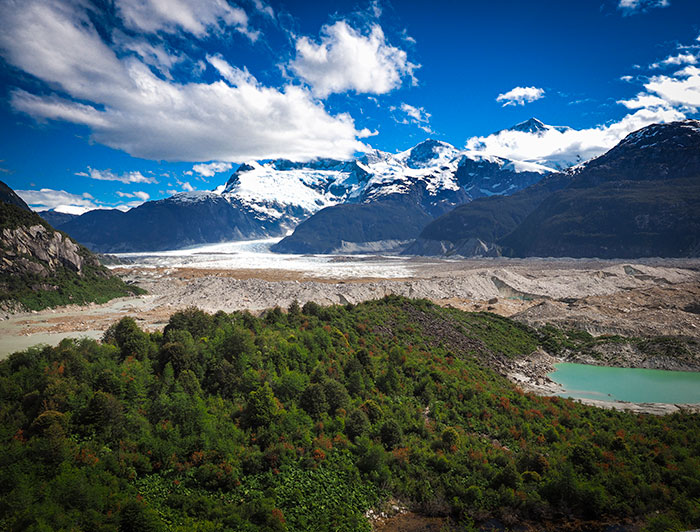
Academics warn: Andean glaciers are losing mass up to 35% faster than the global average
Juan Luis García, professor at the UC Chile Institute of Geography, is one of more than 30 scientists who participated in an international study that provided devastating details about how climate change is affecting the Andes mountain range, the largest area of glaciers in the Southern Hemisphere outside of Antarctica.
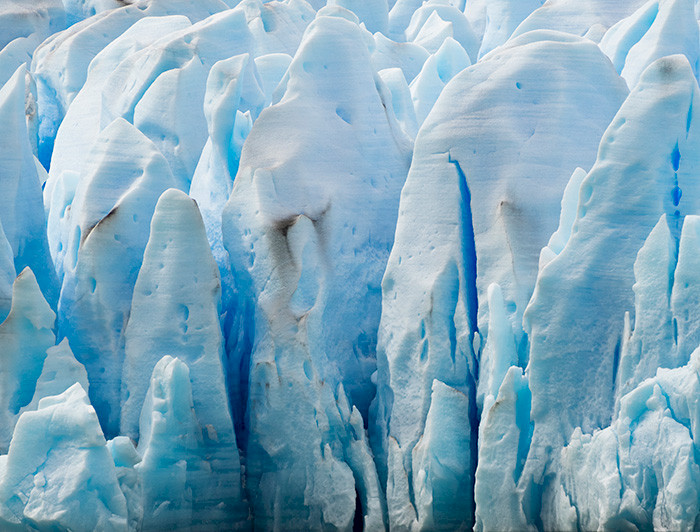
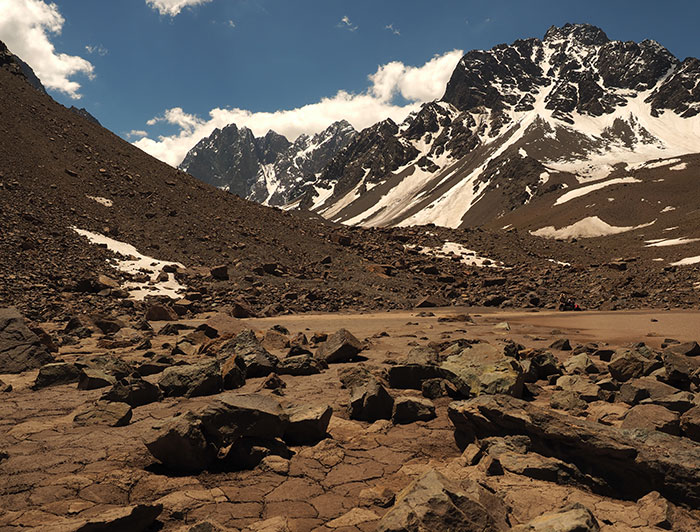
photo_camera Climate change is dramatically affecting the glaciers of the Andes mountain range, affecting their role as a reservoir of freshwater. (Photo credit: Nicole Saffie)
There are nearly 25,000 glaciers in the Andes mountain range, from Venezuela to Chile, covering an area of approximately 30,000 km², the largest glacial surface in the Southern Hemisphere outside of Antarctica. How has climate change affected them, and what are the consequences for humans?
These are the questions posed by a group of more than 30 scientists from around the world who produced a report on the risks to water security and their environmental consequences. This is the policy brief "Deplete and Retreat: The Future of Andean Water Towers", a multidisciplinary proposal led by Bethan Davies, an academic at the University of Newcastle, under the UKRI NERC research project "Deplete and Retreat: The Future of Andean Water Towers (NE/X004031/1)," led by academic Jeremy Ely (University of Sheffield), principal investigator. Hydrologists, glaciologists, climatologists, and geographers are collaborating on the research, including Juan Luis García, a PhD in Earth Sciences from the University of Maine and a professor at the UC Chile Institute of Geography.
According to the document, Andean glaciers are shrinking at a rate of 0.7 m per year, which is 35% faster than the global average.
"The primary motivation for this work is to build a better understanding of our Andes mountain range as a water reservoir in its different zones and its projections for the future," the professor states.
The main threat, according to the authors of the document, is related to climate change: air temperatures in the Andes mountain range are increasing, as well as the volume, phase, and distribution of precipitation. "And this leads to a decrease in snowfall and an increase in droughts," explains Juan Luis García, adding that "in a recent publication, we determined that the rate of glacier melting has been accelerating in recent decades, compared to the global estimate for the 20th century." In this scenario, Andean glaciers are shrinking at a rate of 0.7 m per year, which is 35% faster than the global average, according to the document.
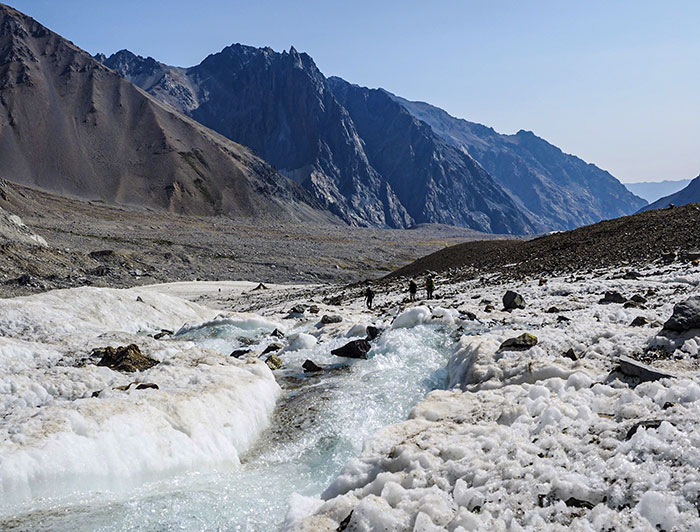
The consequences? The reduction and eventual disappearance of glaciers will lead to a decrease in water availability downstream. They may contribute to extreme droughts in the arid and semi-arid Andes, which can impact the water and food security of populations along the mountain range.
An example of these consequences is being suffered by Andean farming communities in Chile and neighboring countries: "The loss of ice mass volume in the Andes, along with the drought, affects the productivity of Andean plains and the communities that depend on them. For example, an activity associated with goat cheese production in the Coquimbo mountain range. Given the drought, the productivity of the plains where the goats graze decreases, and they are unable to sustain their production at a lower level. One of the consequences is that ranchers are forced to purchase fodder from regions further south and import it to the Limarí River valley (Coquimbo Region, Chile)," explains the academic.
Under Threat
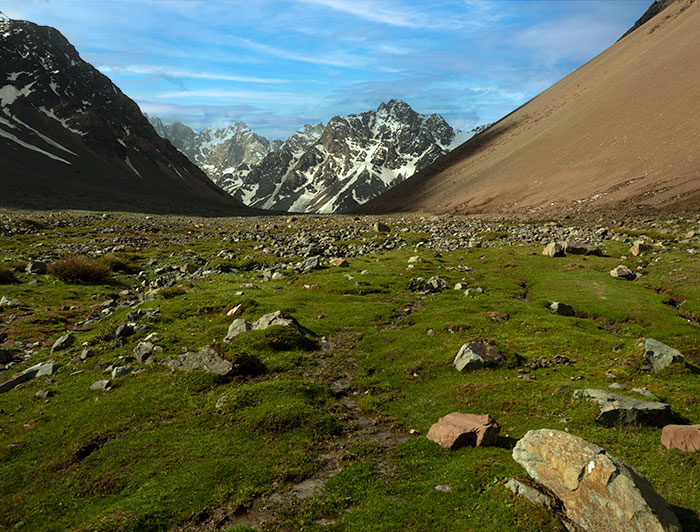
According to the document, climate models project that temperatures across the Andes will increase between 1.1°C and 4.5°C by the end of the century. "Changes in precipitation vary spatially, with increases in precipitation in the Peruvian Andes of between 1.8% and 3.3%, in contrast to a decrease in the Chilean and Argentine Andes of between 1.9% and 12.4%," the academics involved in the project state regarding the impact on our country's glaciers.
In this sense, and under higher emission scenarios, there would also be an almost total loss of glaciers in the tropical Andes, including those in Venezuela, Colombia, Ecuador, Peru, and Bolivia. While "throughout the rest of the Andes, they will experience significant losses under optimistic climate change scenarios, and up to 58% of the current ice volume will be lost," the document states.
“(...) The idea of this document is that it can function as a resource for public authorities to make science-based decisions regarding the multilateral effects of climate change (...)" - Juan Luis García, academic at the UC Chile Institute of Geography.
Despite the alarming details provided, the academics acknowledge that "preventing glacier shrinkage locally is not realistic" but that any mitigation strategy should consider the variations in the different geographic areas encompassed by the Andes, the natural flows, and associated water reserves.
Finally, and in line with the recommendations of the policy brief, Juan Luis García explains that "it is not possible to stop the retreat of the ice, but the idea of this document is that it can serve as a resource for public authorities to make scientifically based decisions regarding the multilateral effects of climate change, river flow, groundwater levels, and ice loss in the Andes."